Heart disease and stroke are the leading causes of death globally, profoundly impacting millions of lives each year. While cholesterol has long been a focal point in managing cardiovascular risk, emerging scientific understanding highlights Apolipoprotein B (ApoB) as a more precise and critical marker. Understanding and actively managing your ApoB levels is paramount for a proactive approach to safeguarding your heart health. This comprehensive guide will equip you with the knowledge and actionable strategies needed to lower your ApoB and significantly reduce your risk of cardiovascular disease.
Introduction: Beyond Cholesterol – Understanding the True Driver of Heart Risk
For decades, the conversation around heart health has largely revolved around cholesterol numbers, particularly LDL-C, often dubbed "bad cholesterol." However, this traditional approach may be overlooking a more accurate predictor of cardiovascular risk.
Cardiovascular diseases, including heart disease and stroke, claim more lives in the U.S. than all forms of cancer and accidental deaths combined. In 2023 alone, 919,032 people died from cardiovascular disease in the United States, accounting for 1 in every 3 deaths. This immense burden also carries a substantial economic impact, with annual healthcare costs for cardiovascular disease in the U.S. estimated at $100 billion, largely for hospital stays and medications.
The sheer scale of these statistics underscores the urgent need for more effective prevention and management strategies. While traditional cholesterol markers like total cholesterol and HDL cholesterol offer valuable insights, they may not fully capture an individual's risk. Emerging research strongly advocates for prioritizing ApoB as a key metric, offering a more direct window into the processes that drive cardiovascular disease.
The Hidden Threat: Why ApoB is Your Most Important Heart Health Number
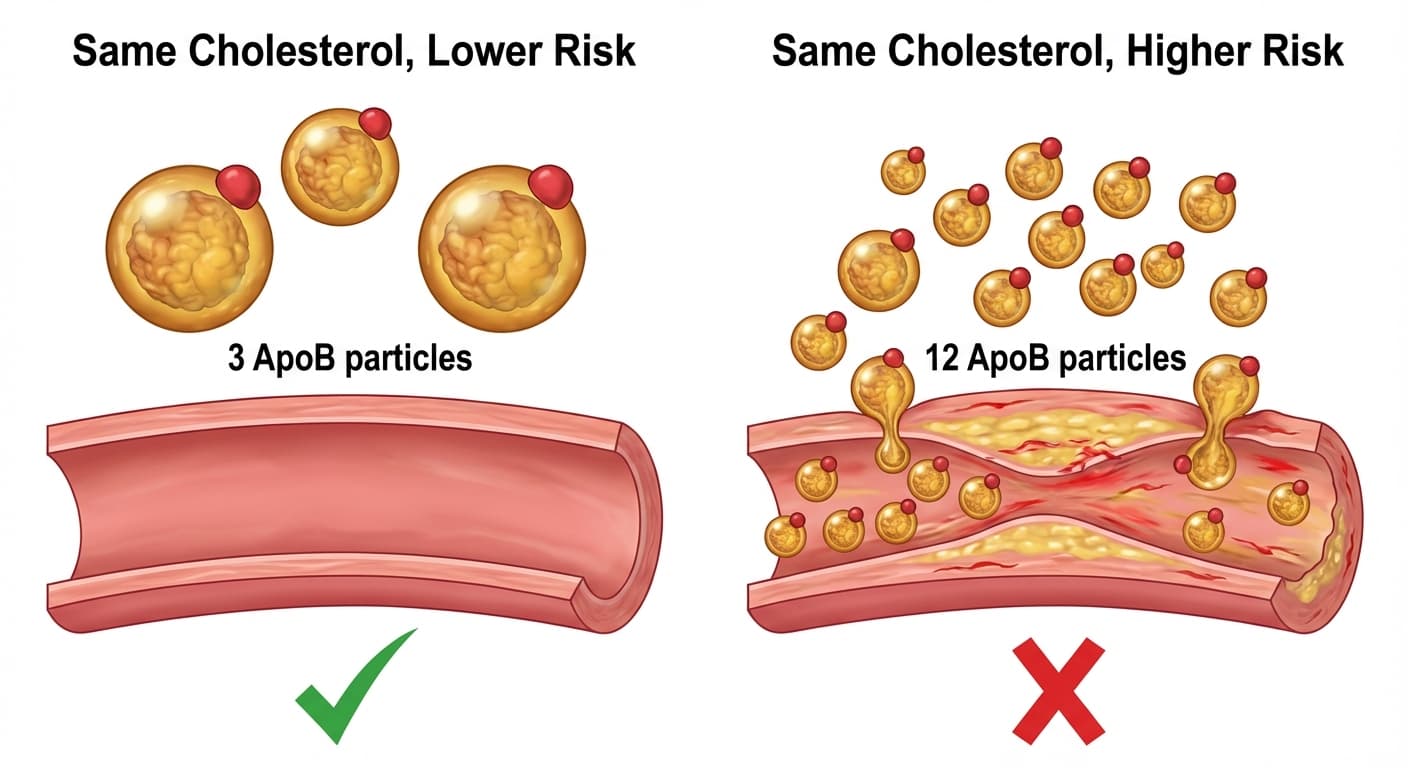
A high number of cholesterol-carrying particles (ApoB) increases the risk of plaque formation more than the total amount of cholesterol (LDL-C) within those particles. While total cholesterol and LDL-C provide valuable information, they are indirect measures. ApoB, on the other hand, is a direct count of the particles in your blood that carry cholesterol and contribute to plaque buildup in your arteries.
Each of these atherogenic particles contains one molecule of ApoB. Therefore, measuring ApoB is essentially counting the number of potentially harmful cholesterol-carrying particles.
A study of over 200,000 people demonstrated that measuring the number of cholesterol-carrying particles (ApoB) predicts heart attack risk far better than the traditional cholesterol test; standard cholesterol tests may underestimate heart disease risk in about one in twelve patients, and 20-40% of first-time CVD occurrences are fatal.
This highlights ApoB's critical role as a bottleneck factor, directly influencing the progression of atherosclerotic cardiovascular disease (ASCVD).
What This Guide Will Cover
This guide is designed to be your comprehensive resource for understanding and managing ApoB. We will delve into:
- The science behind ApoB and how it drives cardiovascular disease
- Why ApoB is a more precise indicator than LDL-C or Non-HDL-C
- How to assess your personal risk and when to get tested
- A step-by-step action plan for lifestyle changes
- Medical interventions and advanced support options
- Building a personalized, sustainable plan with your healthcare team
The Science of ApoB: Your Heart's Hidden Number
Understanding the fundamental science behind ApoB is the first step toward effective management. This section breaks down what ApoB is, how it directly impacts cardiovascular health, and why it is a more insightful metric than traditional cholesterol measurements.
What is ApoB? The "Bad" Particle Count
Apolipoprotein B (ApoB) is a protein that serves as a primary structural component of low-density lipoprotein (LDL) particles, along with other lipoproteins like very-low-density lipoprotein (VLDL) and intermediate-density lipoprotein (IDL). These lipoproteins are responsible for transporting cholesterol from the liver to the body's cells.
However, when there are too many of these particles, or when they become modified, they can contribute to atherosclerosis. The problem arises when there is an excess of ApoB-containing particles circulating in the bloodstream. These particles can:
- Penetrate artery walls - Small, dense particles especially can enter the inner lining
- Become trapped and oxidized - Leading to inflammatory responses
- Trigger plaque formation - The hallmark of atherosclerotic cardiovascular disease
Over time, this process leads to the formation of atherosclerotic plaques, which narrow arteries and impede blood flow.
ApoB vs. LDL-C and Non-HDL-C: Why It's More Precise
Traditional lipid panels measure LDL-C (low-density lipoprotein cholesterol) and Non-HDL-C (non-high-density lipoprotein cholesterol). While useful, these are measurements of the cholesterol content within various lipoproteins, not the particle count itself.
Think of it this way:
- LDL-C measures how much cholesterol is being transported
- ApoB measures how many "vehicles" are doing the transporting
Studies have shown that the number of LDL particles is a stronger predictor of cardiovascular events than the amount of cholesterol within those particles.
A key advantage of ApoB testing is its ability to capture the risk associated with not only LDL but also other cholesterol-carrying particles like VLDL and IDL. This comprehensive particle count offers a more accurate picture of an individual's risk for developing conditions such as coronary heart disease and cerebrovascular disease.
The Direct Link: High ApoB and Cardiovascular Events
The scientific consensus is increasingly clear: elevated ApoB levels are directly associated with an increased risk of major cardiovascular events, including:
- Heart attacks (myocardial infarction)
- Strokes
- Coronary heart disease (CHD)
High ApoB levels signify a greater concentration of atherogenic particles circulating in your blood. As they accumulate within artery walls, they contribute to plaque formation, which can lead to blockages. When a plaque ruptures, it can cause a sudden occlusion, resulting in a heart attack or stroke.
Lipoprotein(a): Another Important ApoB-Containing Particle
Lipoprotein(a), or Lp(a), is a specialized type of lipoprotein that also contains ApoB. While it shares the ApoB component with LDL, Lp(a) has a unique structure and is considered an independent risk factor for cardiovascular disease.
Key facts about Lp(a):
- Genetically determined - You're born with your level, and it doesn't change much with diet or lifestyle
- Affects about 20% of the population - Elevated Lp(a) significantly increases cardiovascular risk
- Not responsive to statins - Requires specific treatment approaches
- Inherited - If you have it, your children might too
Understanding Lp(a) alongside ApoB provides a more nuanced view of an individual's atherogenic burden.
Assessing Your ApoB Levels and Personalized Risk
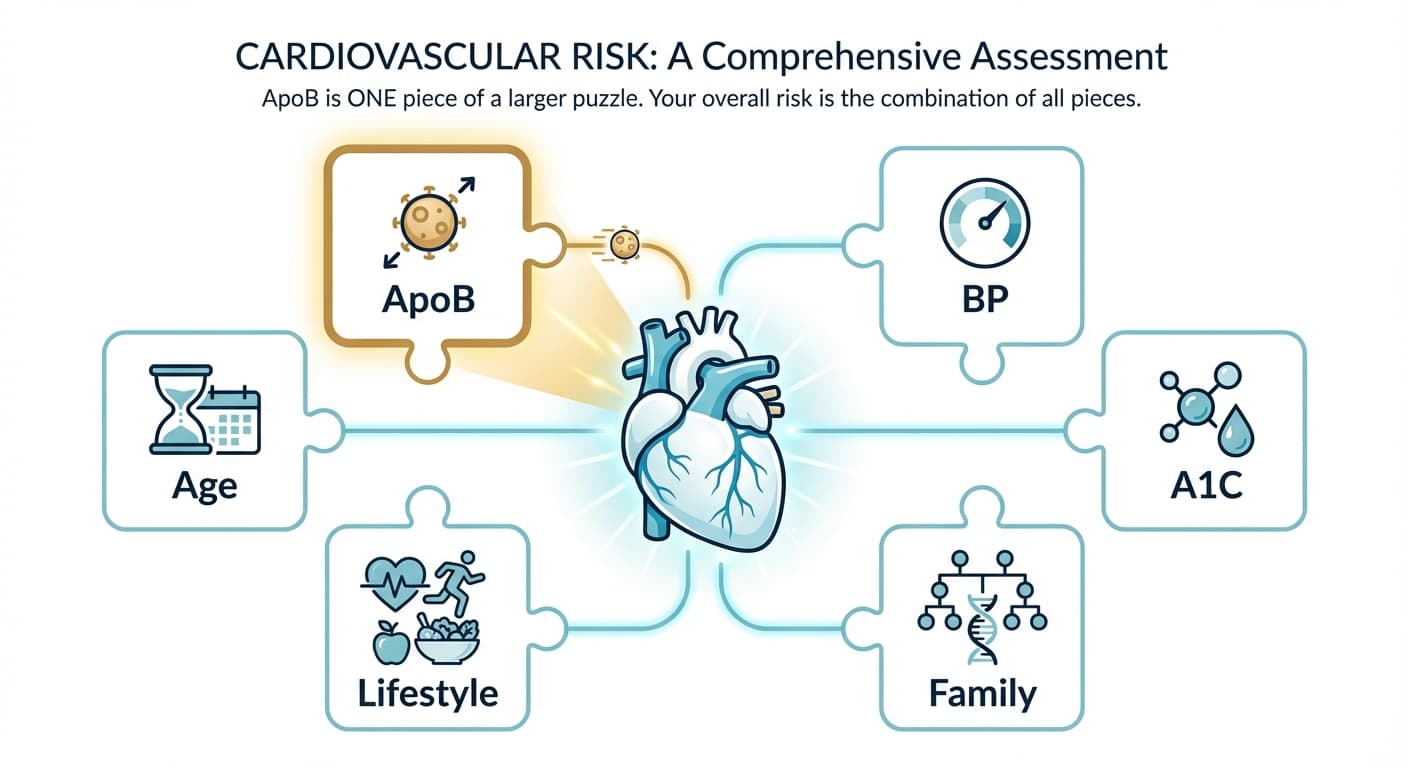
Understanding your ApoB status is crucial for tailoring an effective strategy to reduce your cardiovascular risk.
When to Ask Your Healthcare Provider for an ApoB Test
Current guidelines from the American Heart Association (AHA) and the American College of Cardiology (ACC) increasingly emphasize the importance of ApoB testing. It is strongly recommended for individuals with:
- Established cardiovascular disease - To assess treatment effectiveness and residual risk
- Elevated LDL-C or Non-HDL-C - To gain a more precise understanding of their risk
- Family history of premature heart disease - To identify genetic predispositions
- Multiple cardiovascular risk factors - Such as diabetes, high blood pressure, obesity, smoking, or family history of high cholesterol
- Intermediate risk (5-7.5% 10-year ASCVD risk) - To refine risk stratification beyond traditional scores
If your provider isn't ordering ApoB, or isn't sure how to act on the result, that's a reason to work with a board-certified clinical lipidologist — advanced lipid testing and interpretation are the core of that specialty.
Interpreting Your ApoB Results
While specific target numbers can vary based on individual risk factors, general guidelines exist:
- Very High Risk (Established CVD): Below 65 mg/dL
- High Risk: Below 80 mg/dL
- Moderate Risk: Below 90 mg/dL
It's important to remember that ApoB is a continuous risk factor; lower is generally better. Your health provider will consider your ApoB results alongside other cardiovascular risk factors to formulate a comprehensive risk assessment.
Beyond ApoB: Comprehensive Cardiovascular Risk Assessment
While ApoB is a powerful tool, it's essential to view it within the broader landscape of cardiovascular risk. A complete risk assessment considers multiple factors:
- Blood Pressure - High blood pressure strains the heart and blood vessels
- Diabetes - Elevated blood glucose levels damage blood vessels
- Smoking - Damages blood vessels and reduces oxygen supply to the heart
- Obesity - Particularly abdominal fat, linked to inflammation and metabolic dysfunction
- Family History - Genetic predisposition plays a significant role
- Age and Sex - Risk increases with age
Tools like the ASCVD Risk Estimator Plus from the American College of Cardiology help estimate a person's 10-year risk of developing atherosclerotic cardiovascular disease.
Your Step-by-Step Action Plan: Lifestyle Changes to Lower ApoB

Lifestyle changes form the cornerstone of managing ApoB and reducing cardiovascular disease risk. These changes are not only effective but also crucial for overall health and well-being.
The Power of a Heart-Healthy Diet
Diet plays a pivotal role in influencing ApoB levels. A heart-healthy eating pattern focuses on whole, unprocessed foods:
- Emphasize Unsaturated Fats - Replace saturated and trans fats with monounsaturated and polyunsaturated fats found in olive oil, avocados, nuts, seeds, and fatty fish (like salmon and mackerel)
- Increase Soluble Fiber Intake - Foods rich in soluble fiber, such as oats, barley, beans, lentils, apples, and citrus fruits, can bind to cholesterol and help remove it from the body
- Consume Lean Proteins - Opt for fish, poultry without skin, beans, and tofu as your primary protein sources
- Limit Refined Carbohydrates and Sugars - High intake can negatively affect triglyceride levels and overall metabolic health
- Focus on Whole Foods - Base your diet on vegetables, fruits, whole grains, legumes, nuts, and seeds
Making rapid dietary changes can lead to noticeable improvements in cholesterol markers within days and significant changes within weeks.
Move Your Body: Exercise Strategies for ApoB Reduction
Regular physical activity is a powerful tool for improving cardiovascular health and can contribute to lowering ApoB levels.
- Aerobic Exercise - Activities like brisk walking, jogging, swimming, cycling, and dancing. Aim for at least 150 minutes of moderate-intensity aerobic activity or 75 minutes of vigorous-intensity activity per week
- Strength Training - Incorporating resistance training at least two days a week can help build muscle mass, which boosts metabolism and improves lipid profiles
- Consistency is Key - Regular exercise is more beneficial than sporadic intense workouts. Find activities you enjoy to ensure long-term adherence
Achieving and Maintaining a Healthy Weight
Excess body weight, particularly abdominal fat, is closely linked to increased ApoB production and elevated cardiovascular disease risk.
- Calorie Deficit - To lose weight, consume fewer calories than you expend through a combination of dietary changes and increased physical activity
- Focus on Sustainable Habits - Aim for gradual weight loss (1-2 pounds per week) through sustainable changes rather than crash diets
- Monitor Progress - Regularly track your weight and waist circumference. A smaller waistline often indicates reduced visceral fat
Stress Management and Quality Sleep
The impact of stress and sleep on cardiovascular disease is often underestimated. Chronic stress can lead to elevated cortisol levels, which can increase inflammation and negatively affect lipid metabolism.
- Stress Reduction Techniques - Incorporate practices like mindfulness meditation, deep breathing exercises, yoga, spending time in nature, or engaging in hobbies
- Prioritize Sleep - Aim for 7-9 hours of quality sleep per night. Establish a regular sleep schedule and create a relaxing bedtime routine
- Seek Professional Help - If you struggle with chronic stress or sleep issues, consult your healthcare provider
Quit Smoking and Limit Alcohol
Smoking and excessive alcohol consumption are significant contributors to poor cardiovascular health and can negatively impact ApoB levels.
- Smoking Cessation - Quitting smoking is one of the most impactful lifestyle changes you can make for your heart health. It immediately reduces your risk of heart attack and stroke
- Moderate Alcohol Intake - If you drink alcohol, do so in moderation (up to one drink per day for women and up to two drinks per day for men)
Medical Interventions and Advanced Support
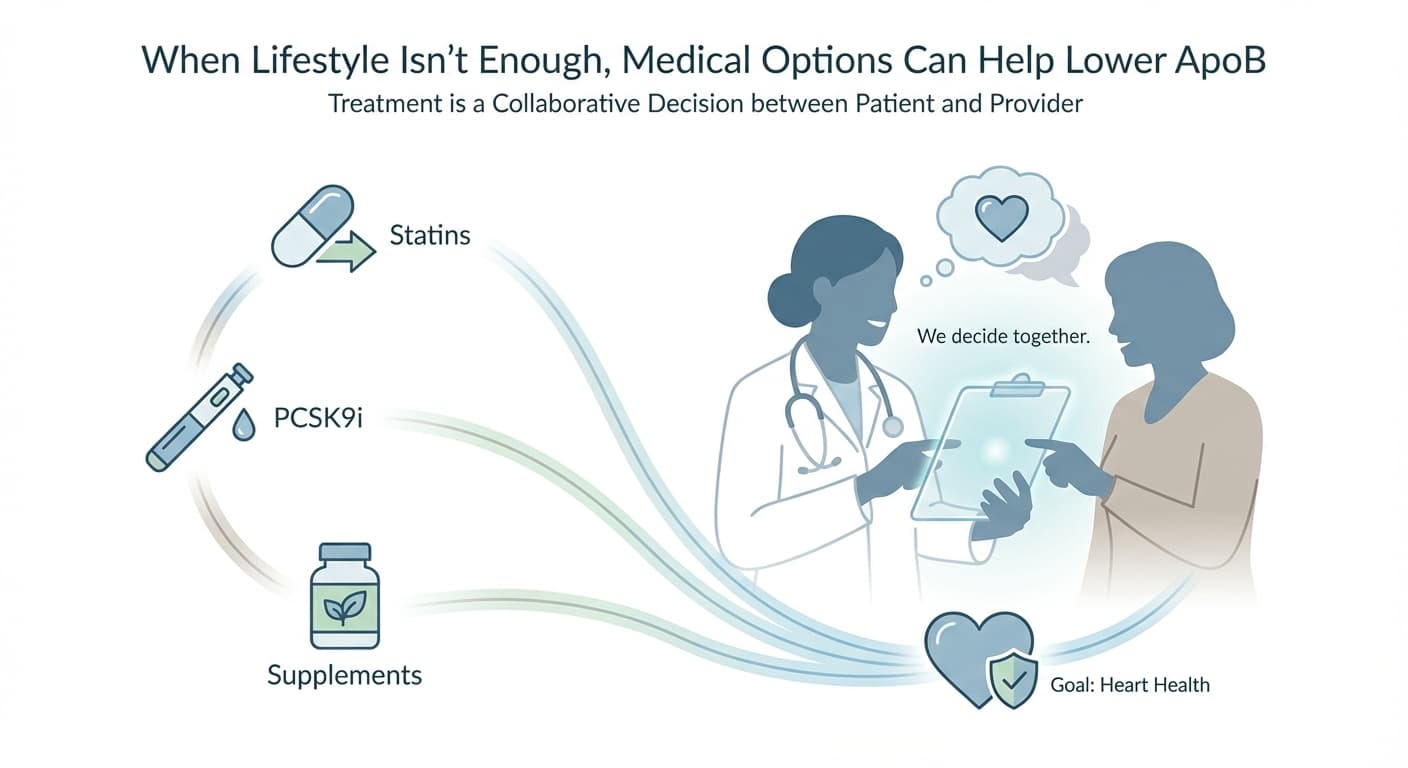
While lifestyle changes are paramount, they may not always be sufficient to achieve target ApoB levels, especially for individuals with genetic predispositions or established cardiovascular disease.
Pharmaceutical Options: When Lifestyle Changes Aren't Enough
When lifestyle changes alone do not adequately lower ApoB, your healthcare provider may recommend pharmacologic treatments:
- Statins - The most common and well-studied medications for lowering cholesterol. Statin therapy works by inhibiting an enzyme in the liver that produces cholesterol, thereby reducing LDL production and consequently lowering ApoB
- Ezetimibe - Works by blocking the absorption of cholesterol in the small intestine. Often used in combination with statins for greater reductions
- PCSK9 Inhibitors - Newer, injectable medications that significantly lower LDL-C and ApoB by increasing the liver's ability to remove LDL from the blood. Particularly effective for individuals who cannot tolerate statins or require more aggressive reduction
The selection of a treatment plan is highly individualized and should be determined through thorough discussion with your healthcare team.
Supplements: Evidence-Based Choices
Certain supplements may offer adjunctive benefits for lipid management. Always discuss their use with your healthcare provider:
- Omega-3 Fatty Acids - Found in fish oil supplements, can help lower triglycerides and may have anti-inflammatory effects
- Plant Sterols and Stanols - Can help reduce cholesterol absorption, complementing dietary efforts
- Fiber Supplements - Psyllium or other soluble fiber supplements can aid in cholesterol reduction if dietary intake is insufficient
Note: Supplements should not replace proven medical treatments or foundational lifestyle changes.
Building Your Personalized ApoB-Lowering Plan
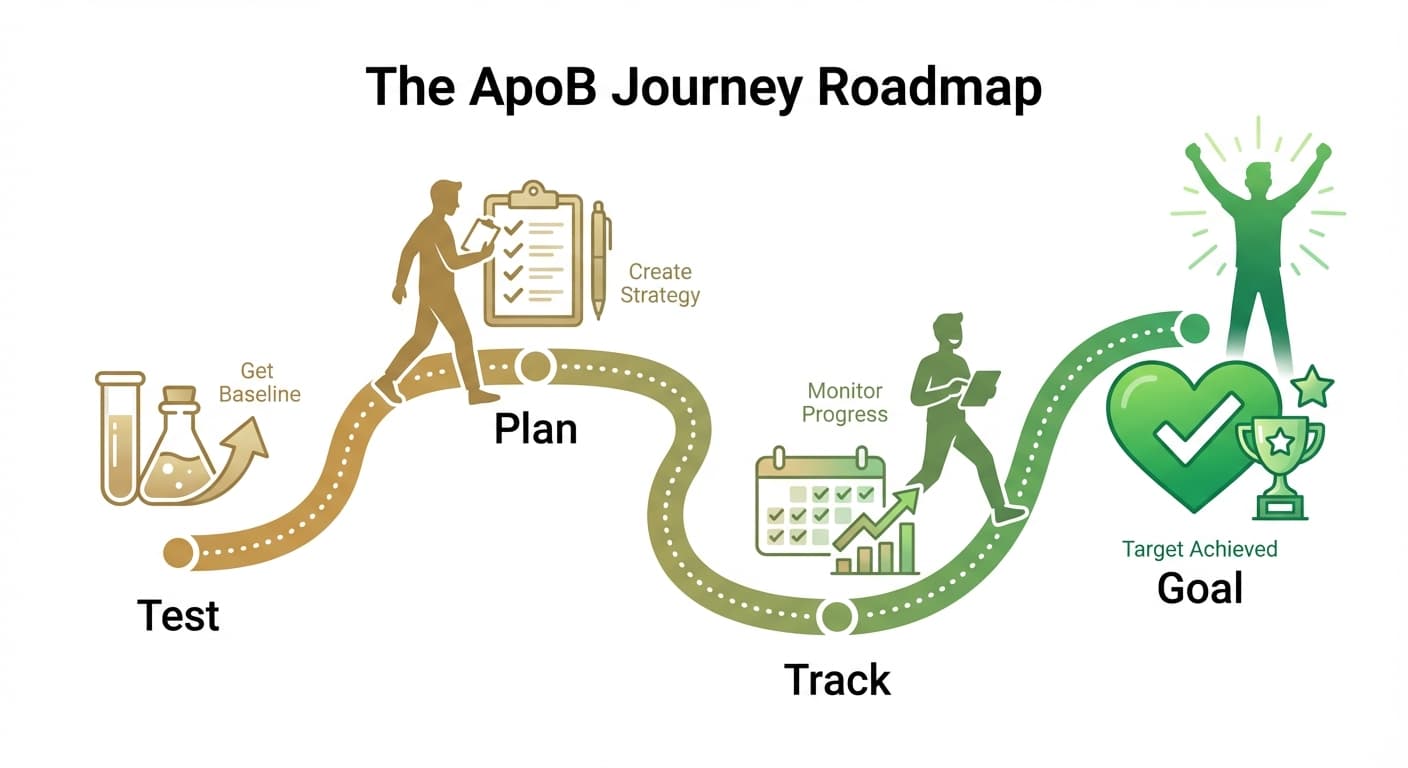
Effectively lowering ApoB and maintaining cardiovascular health is a long-term commitment that requires a personalized, structured approach.
Setting SMART Goals
To ensure success, your ApoB-lowering plan should be built around SMART goals:
- Specific - Instead of "eat healthier," aim for "increase my daily vegetable intake to five servings"
- Measurable - "Walk 30 minutes, five days a week" is measurable
- Achievable - Set realistic targets based on your starting point
- Relevant - Ensure goals align with reducing cardiovascular risk
- Time-Bound - "I will incorporate two fish meals per week for the next month"
Tracking Your Journey
Consistent tracking is key to staying motivated and making necessary adjustments:
- Food Journals - Recording meals helps identify dietary patterns
- Exercise Logs - Documenting physical activity ensures consistency
- Regular Testing - Follow-up ApoB and lipid tests as advised by your healthcare team
- Wearable Technology - Fitness trackers can monitor activity and sleep patterns
Overcoming Barriers
Life is full of obstacles. Strategies for long-term adherence:
- Time Constraints - Plan meals and workouts in advance. Integrate short bursts of activity into your day
- Social Pressures - Communicate your health goals to friends and family
- Lack of Motivation - Revisit your goals. Celebrate small victories
- Plateaus - Reassess your plan with your healthcare team
Working with Your Healthcare Team
Your healthcare team—including your doctor, dietitian, and potentially a cardiologist—is your most valuable ally in managing ApoB and cardiovascular risk.
- Open Communication - Be honest about challenges, successes, and concerns
- Active Participation - Ask questions and understand your test results
- Regular Check-ups - Attend all scheduled appointments to monitor progress
- Information Sharing - Share your food journals, exercise logs, and other relevant data
Conclusion: Taking Control of Your Cardiovascular Health
Understanding and actively managing your Apolipoprotein B (ApoB) levels is a critical step in taking proactive control of your cardiovascular health. This guide has illuminated why ApoB is a superior marker for predicting heart attack and stroke risk compared to traditional cholesterol tests.
The science is clear: the number of atherogenic particles in your blood, directly reflected by your ApoB number, is a powerful indicator of your cardiovascular risk. Proactive management—through informed lifestyle changes, appropriate medical treatment when necessary, and consistent monitoring—is essential for safeguarding your heart.
You now possess the knowledge to:
- Engage in informed discussions with your healthcare team
- Implement effective lifestyle changes
- Understand the role of medical interventions
- Build a sustainable, personalized plan
By embracing a heart-healthy diet, regular exercise, healthy weight management, stress reduction, quality sleep, and by avoiding smoking and excessive alcohol, you can significantly impact your ApoB levels.
Your journey to reduced cardiovascular risk is a collaborative effort. By working closely with your healthcare provider, setting SMART goals, and tracking your progress, you can build a sustainable plan. Remember that every step you take toward lowering your ApoB is a step toward a healthier heart.
Ready to take the next step? Schedule a consultation to discuss whether advanced lipid testing and personalized ApoB management is right for you.